Les Animals school is set in the landscape of the Terraprims, a territorial unit of the Empordà characterized by the simplicity of its agroforestry mosaic: agricultural margins, successive flat fields, white pine and holm oak forests, and streams with riparian vegetation. This cultural landscape, shaped over centuries by agricultural and forestry activity, defines the identity of the territory and becomes the outdoor classroom of the school.
The agricultural and forestry environment surrounding the school uses permaculture to enhance biodiversity in a continuous process of observing nature. Spaces of mature forest, regenerating forest, humid forest, and edible forest are integrated, serving as a living classroom for students and providing high ecological and cultural value.
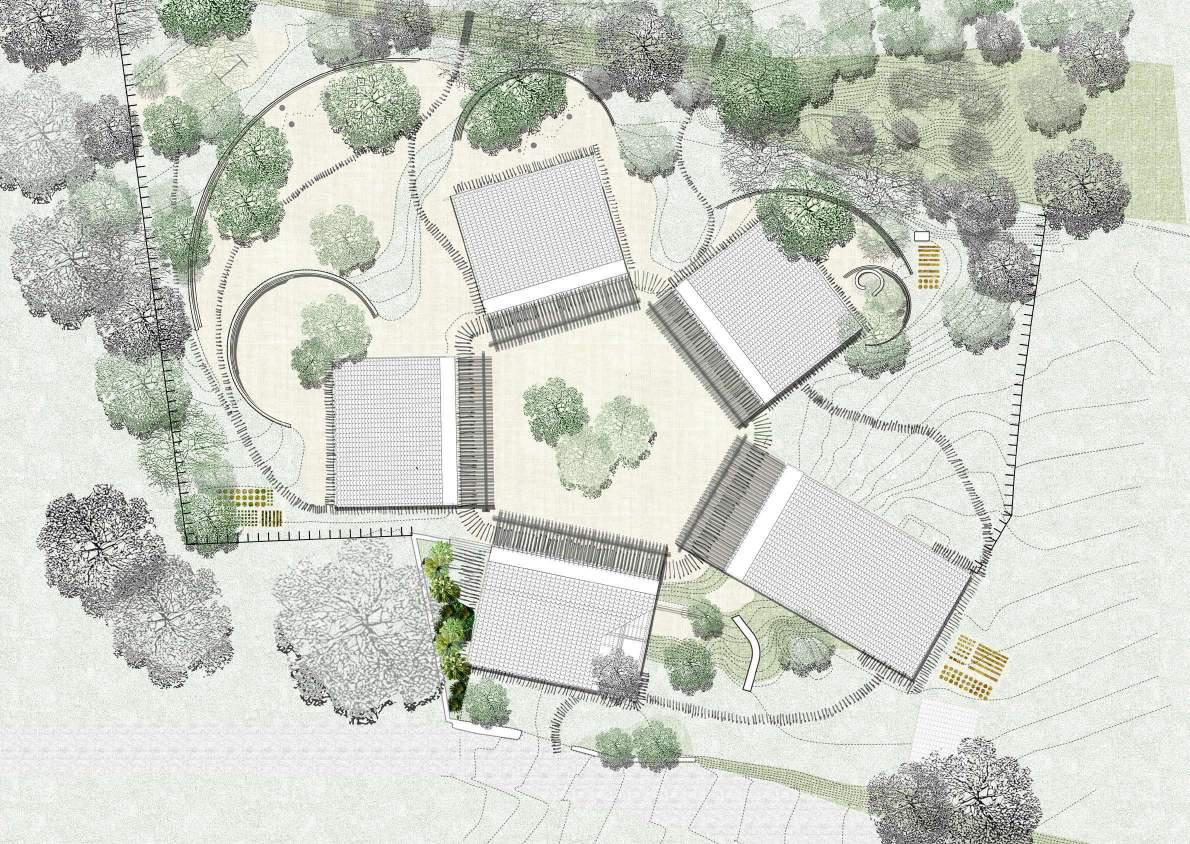
The edible forest —one of the most innovative elements of the project— is inspired by natural forest ecosystems and creates a multilevel and nutritious garden that combines fruit trees, productive shrubs, and herbaceous plants. The school garden complements the edible forest with seasonal annual crops: the autumn tomato harvest, preserves and jams, the wheat festival, and bread-making in the school's oven. Children participate in the entire process: from seed to table, including caring, harvesting, transforming, and consuming.
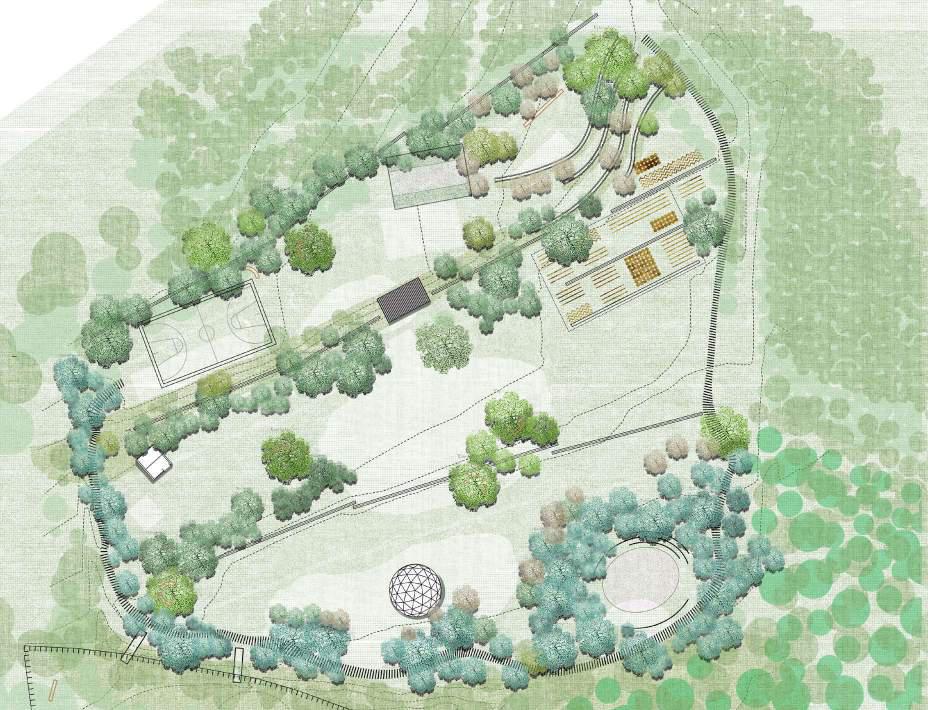
Another pillar of the project is sustainable water management based on the capture, regulation, and infiltration of rainwater, in a climate with alternating periods of drought and torrential rains. Natural drainage ponds, vegetated ditches, and channel systems are built to collect and conduct water sustainably, closing the hydrological cycle and offering educational resources to students to raise awareness of natural processes.
To preserve agricultural biodiversity and knowledge passed down through generations, ancestral practices are recovered, such as margin and terrace systems to prevent erosion, water management through channels and infiltration ponds, and the use of plant residues to enrich the soil. Forest management strategies are implemented to promote resource use, prevent fires, and improve forest health.